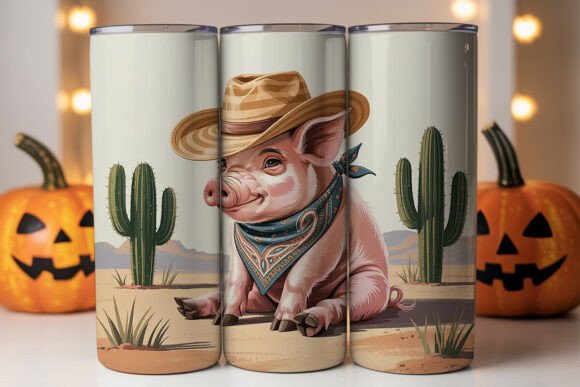
Desert Cowboy Pig 20oz Tumbler Design Review
As a designer who spends more time staring at stitch density charts and fabric swatches than actually sleeping, I approach every new digital asset with a healthy dose of skepticism. The market is flooded with generic clipart disguised as professional embroidery files, so when I stumbled upon the Desert Cowboy Pig 20oz Tumbler Design, I decided to put it through its paces. This isn’t just about whether it looks cute in a preview window; it’s about whether it holds up under the needle, how it translates to physical goods, and if it can actually drive sales for an Etsy shop or craft fair booth.
The premise is inherently playful: a pig donning cowboy attire set against a desert backdrop. It’s whimsical, slightly irreverent, and undeniably eye-catching. But does that personality survive the translation from screen to thread? Let’s break down the practical application of this design for real-world projects.
First Impressions and Visual Personality
When you first load the Desert Cowboy Pig 20oz Tumbler Design, the immediate takeaway is its strong graphic presence. Unlike many embroidery designs that rely on subtle shading which often gets lost in satin stitches, this piece leans into bold shapes and clear silhouettes. The mood is lighthearted and rustic, making it perfect for brands that want to project a fun, approachable vibe rather than something corporate or overly elegant.
The layout feels balanced, which is crucial for a tumbler wrap or any cylindrical application. In my experience, designs that are too cluttered tend to distort when wrapped around curved surfaces. Here, the central figure commands attention without overwhelming the surrounding negative space. It suggests a design that respects the limitations of the medium while still delivering maximum visual impact. For an Etsy seller looking to create unique personalized gifts, this kind of distinct character work is exactly what helps a listing stand out in a crowded feed.
Real-World Application: Beyond the Tumbler
While the product title suggests a tumbler wrap, a savvy designer knows that a high-quality graphics file like this has versatile applications. I tested the concept mentally across several categories of handmade products.
- Custom Apparel: On a heavy cotton sweatshirt or a durable canvas tote bag, the design would pop beautifully. The bold lines translate well to fill stitch areas, creating a textured look that feels substantial and high-value.
- Baby Items: There is a surprising amount of charm here for nursery decor or baby onesies. The "cowboy pig" theme is gentle enough for a child’s room but unique enough to avoid looking like mass-produced merchandise.
- Kitchen & Home: Imagine this embroidered on a flour sack towel or a quilted pot holder. The desert theme pairs naturally with rustic home aesthetics, making it a great addition to a boutique’s home goods section.
However, the true test lies in the details. When converting this digital embroidery file into a physical finished product, the contrast between the thread colors and the base fabric becomes paramount. If you are using a dark fabric, you’ll need to ensure the lighter threads in the pig’s outfit have enough coverage to remain legible. Conversely, on light fabrics, the darker outlines will define the shape sharply, provided the stitch density is appropriate.
Technical Considerations for Embroidery Designers
Before committing this design to a client order or a batch of craft business inventory, there are technical hurdles you must navigate. Not all machine embroidery designs are created equal, and assumptions can lead to ruined fabric and frustrated customers.
First, always check the hoop size. While the source material provides PNGs at specific dimensions, your actual hoop might vary depending on your machine. A design that fits perfectly in a 4x4 hoop might require digitizing adjustments if you are trying to fit it into a smaller circular hoop for a cap or a tiny patch. If the original file is intended for a large tumbler wrap, scaling it down for a custom apparel item like a chest pocket logo requires careful review to ensure no detail is lost in the resizing process.
Another critical factor is the stabilizer choice. Because this design likely contains both outlined elements and filled areas, you need a stabilizer that can support the weight of the threads without puckering the fabric. For stretchy knits, like those used in hoodies or athletic wear, a cut-away stabilizer is usually non-negotiable to maintain integrity after washing. For woven fabrics like denim or canvas, a tear-away might suffice, but testing is key.
I also recommend running a black-and-white mockup of the design. This strips away the color distraction and forces you to evaluate the value structure. Are the mid-tones distinguishable from the shadows? If the pig’s hat blends into the background because the thread colors lack sufficient contrast, the design will look muddy once stitched. Adjusting the palette before you start stitching saves hours of rework.
Where to Use Carefully
There are certain scenarios where this design might struggle. Avoid placing it on highly textured fabrics like bouclé or thick waffle weaves unless you are experienced with stabilization techniques; the texture can interfere with the needle penetration, leading to skipped stitches. Similarly, be cautious on thin, slippery fabrics like silk or rayon without proper backing, as the tension required for the satin stitch borders could cause distortion.
Also, consider the end-user. If this is being sold as a holiday gift or a novelty item, the durability matters. Designs with dense fill stitches can sometimes trap lint or become stiff over time. Ensure the final product feels comfortable to hold or wear. For example, if embroidering a tote bag design, make sure the back of the embroidery doesn’t feel like a hard plastic plate, which can be uncomfortable if the bag is slung over a shoulder.
Commercial Viability and Brand Consistency
For the small shop owner or commercial embroidery artist, the value of a design extends beyond its aesthetic appeal. Does it fit your brand voice? If your shop specializes in quirky, farm-to-table aesthetics, the Desert Cowboy Pig 20oz Tumbler Design is a natural fit. It tells a story. Customers buy into narratives, and a design that sparks a smile or a question ("Is that a pig?") creates engagement.
Furthermore, verify the licensing terms before you list this as a small shop product. Many digital assets come with restrictions on how many finished items you can sell. As a professional, protecting your business means understanding these boundaries. If the license allows for commercial use, this design can be a reliable revenue stream across multiple platforms, from Etsy listings to local farmers markets.
In conclusion, the Desert Cowboy Pig 20oz Tumbler Design is a charming, versatile asset that offers more than just novelty value. With proper preparation—checking stitch counts, selecting the right stabilizer, and testing on scrap fabric—it can elevate your offerings from simple crafts to professional-grade merchandise. It works best when paired with sturdy fabrics and bold thread choices, ensuring that the whimsical spirit of the design shines through in the final stitch. For designers willing to do the due diligence, this is a solid addition to their design assets library.